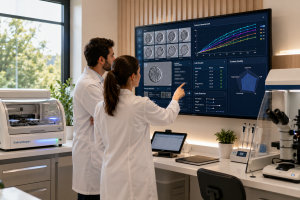


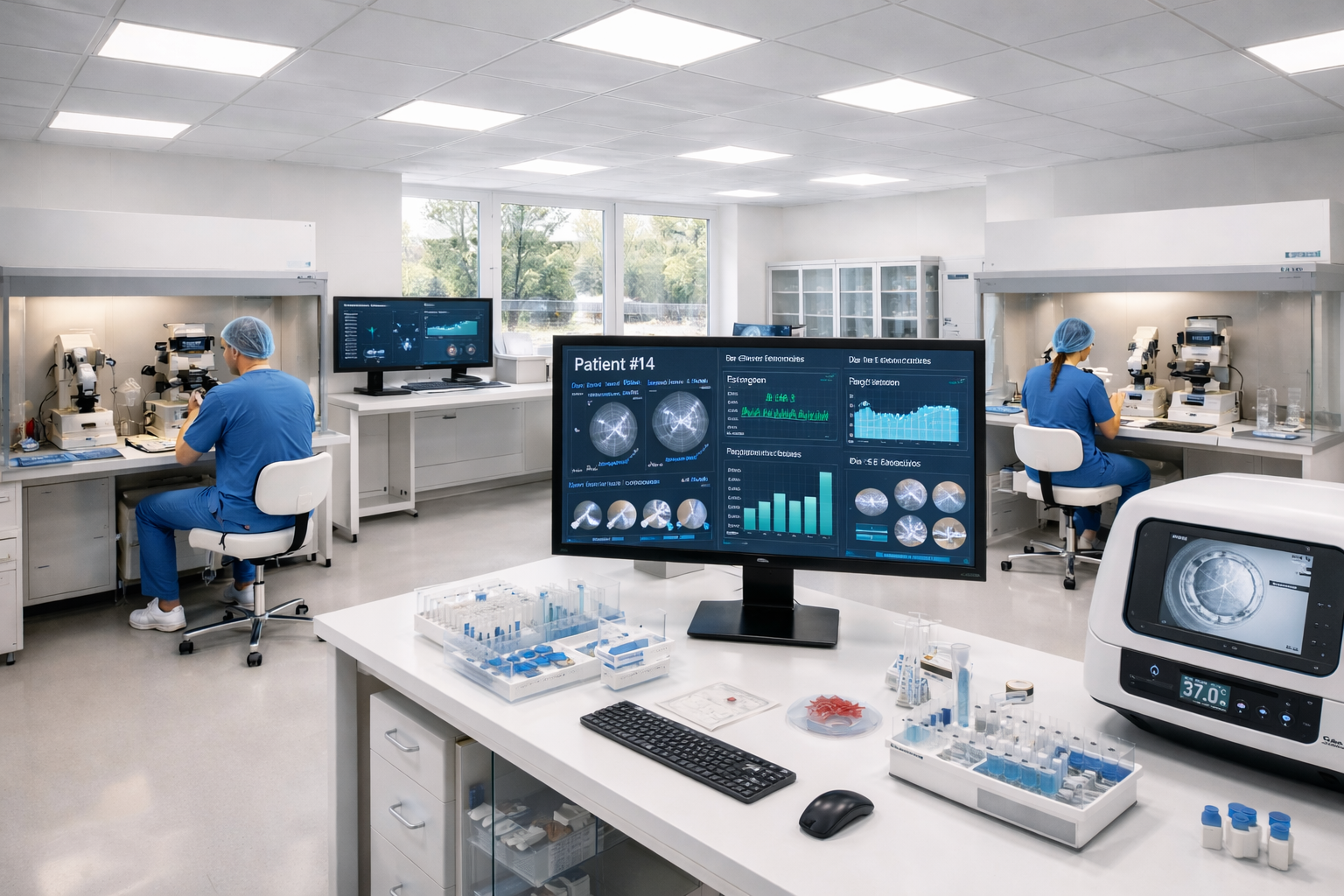
How intelligent systems are starting to reshape decision-making in healthcare
For years, digitalization has been presented as the ultimate goal in healthcare. Electronic medical records, interoperability, system integration, transforming analog processes into digital ones seemed, at times, to be the main destination.
But gradually, a different understanding is emerging. Digitalization was never the final objective. It was simply the first step.
The era of digitalization
Digital transformation has been essential. It has improved traceability, helped structure information and made clinical data more accessible.
For a long time, the main challenge was simply to ensure that what we were doing was properly recorded.
Today, the landscape is beginning to shift.
A new phase is starting
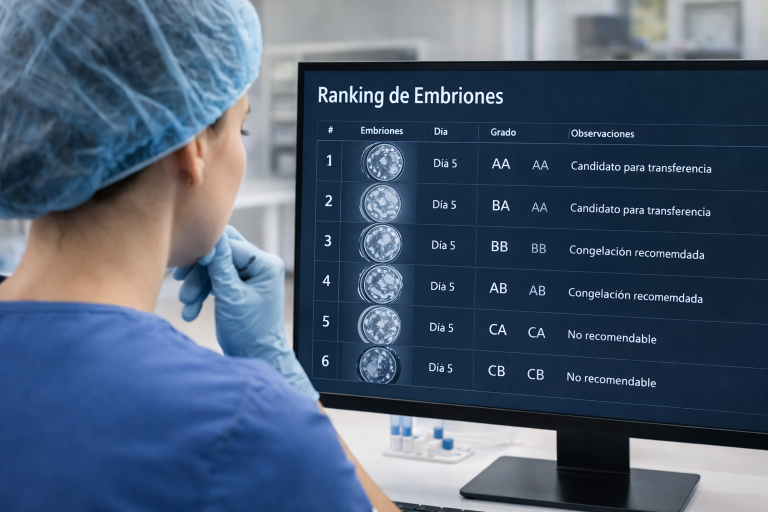
We are entering a stage in which data is no longer used only for documentation, but increasingly to support real clinical decisions.
Predictive models, advanced analytics and intelligent clinical support tools are gradually becoming part of everyday healthcare practice.
This represents more than a technological evolution. It introduces a new way of working.
From recording information to learning from it
For decades, many clinical decisions have relied on accumulated experience, established protocols and mental comparisons with previous cases. This approach remains fundamental and will continue to be of our daily practice.
However, a new layer is emerging.
One that allows professionals to analyse thousands of cases simultaneously and detect patterns that were previously difficult to perceive.
Healthcare is slowly moving from a model based mainly on individual experience to one that can also learn from collective clinical experience.
Digitalization → Clinical intelligence
- We used to focus on recording information
- Now we are beginning to interpret it.
- Soon, we will work alongside systems capable of learning from what happens in our own hospitals and laboratories.
Making decisions with better insight
Predictive models do not replace professionals, but they do allow clinical uncertainty to be approached from a different perspective.
Decisions can increasingly be supported by estimates built on real-world outcomes observed across large patient populations. This opens the door to a more personalised and, above all, more data-aware form of medicine.
Rethinking clinical infrastructure
For this transformation to happen, advanced algorithms alone are not enough. Healthcare systems must be redesigned to capture structured data from the very beginning, integrate it intelligently and turn it into meaningful knowledge for those making decisions every day.
In this process, a new type of healthcare organisation is starting to take shape, one that is capable of learning from its own practice.
In this new phase of Health Digitalization, the focus will be on understanding how learning systems are beginning to reshape clinical practice.
Digitalization was necessary. But clinical intelligence is what will ultimately redefine the future of healthcare.